
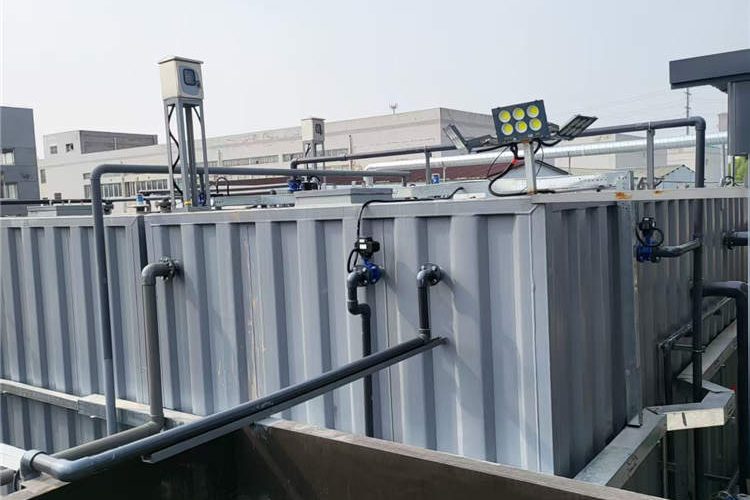
Integrated sewage treatment equipment is an efficient and modular sewage treatment system that achieves sewage purification through the combination of physical, chemical, and biological technologies. The following is a detailed analysis of its core characteristics and process flow:
一、 Core components of equipment
1. Preprocessing unit
Grille well: intercepts large suspended particles (such as fibers, plastics, etc.) to protect subsequent equipment.
Regulating pool: Balance water quality and quantity fluctuations to avoid impact loads affecting treatment effectiveness.
2. Biological processing unit
Contact oxidation tank: using biofilm method (such as MBR membrane technology), microorganisms degrade organic matter and nitrogen and phosphorus pollutants.
Anaerobic/aerobic combined process (such as A/O, AAO): achieving nitrogen and phosphorus removal through denitrification and nitrification.
3. Post processing unit
Disinfection device: UV or chlorine disinfection to ensure that the effluent meets the discharge standards.
Sludge treatment system: reduces sludge production (by more than 90% compared to traditional processes).
二、 Process flow
Sewage enters → grid filtration → regulating tank homogenization → bioreactor (anaerobic/aerobic) → sedimentation/membrane separation → disinfection → standard discharge or reuse.
Optimization in high-altitude regions: Install insulation layers and electrolytic phosphorus removal devices to ensure stable operation at low temperatures.
三、 Core advantages
Efficiency: Integrating multiple processes, the effluent can reach Class A standard.
Compact design: Underground installation saves space, and above ground installation adapts flexibly to different scenarios.
Intelligent: Supports remote monitoring and automatic operation, reducing labor costs.
Anti impact load: Adapt to water quality fluctuations, such as rural domestic sewage or industrial wastewater.
四、 Typical application scenarios
Distributed processing: rural areas, scenic spots, highway service areas, etc.
Emergency response: Rapid response to sudden pollution incidents.
Resource reuse: agricultural irrigation, industrial recycled water, etc.