
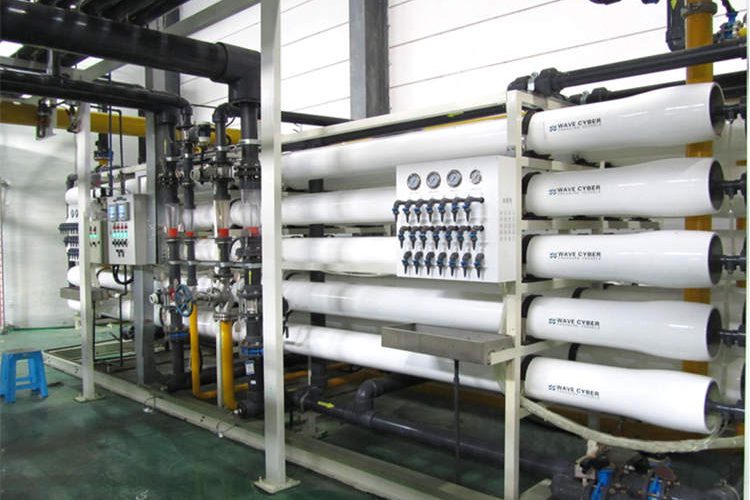
The reverse osmosis device is an efficient water treatment equipment based on membrane separation technology. Its core principle is to achieve the separation of solvent and solute through a semipermeable membrane under high pressure13. The following is a detailed introduction to its key features and working principles:
1. Technical principle
Osmotic pressure and reverse osmosis: Under natural conditions, water molecules will permeate from a low-concentration solution through a semipermeable membrane to a high-concentration solution. Reverse osmosis, on the other hand, involves applying an external force (usually achieved by a booster pump) that exceeds the osmotic pressure, forcing water molecules to flow in the opposite direction, thereby retaining impurities such as salts and heavy metals.
Membrane structure: The pore size of RO membrane is only 0.0001 microns (approximately 1/6000 the size of Escherichia coli), capable of filtering out over 99% of soluble salts, bacteria, and viruses.
2. Core Components and Processes
Pre-treatment system: It includes a PP cotton filter (to intercept sediment and rust) and an activated carbon filter (to adsorb residual chlorine and odor), serving to protect the RO membrane from damage caused by large particulate impurities.
Reverse osmosis membrane: a core component, with a desalination rate of up to 96%-99%, producing water that is close to laboratory pure water standards.
Post-treatment: Some devices incorporate taste-adjusting filters (such as coconut shell activated carbon) to enhance water quality.
3. Application Fields
Household use: Provides direct drinking water, especially suitable for areas with severe water pollution.
Industry: Used for the preparation of high-purity water and the desalination of bitter and salty water in industries such as electronics, medicine, and food.