
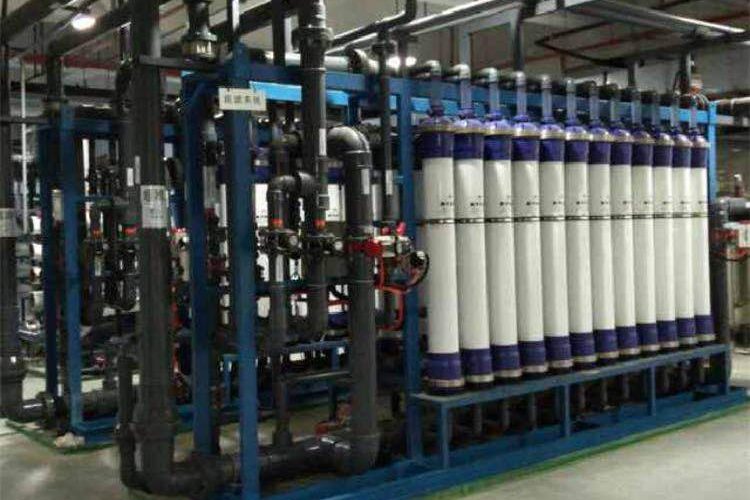
The sewage reuse device is an integrated system that realizes resource utilization after sewage treatment. Its core goal is to achieve specific reuse standards for water quality through deep treatment (such as irrigation, industrial cooling, etc.). The following are its key technologies and application characteristics:
一、 Comparison of core processes
1. Handling depth differences
Conventional sewage treatment: focusing on standard discharge, the process is physical treatment (grid/sedimentation) → biochemical treatment (activated sludge method) → disinfection.
Reuse device: Add advanced treatment units such as ultrafiltration, reverse osmosis, advanced oxidation, etc. after conventional processes to ensure the removal of dissolved solids (TDS<500mg/L) and trace pollutants.
2. Water quality standards
Reclaimed water must meet the “Urban Wastewater Reuse Standards” (such as DB11/307-2013), with a focus on TDS, turbidity, and microbial indicators.
二、 Typical process flow
Pre treatment: The grille intercepts large particles of impurities and regulates the balance of water quality and quantity in the tank.
Biological treatment: MBR membrane technology replaces secondary sedimentation tanks, increasing sludge concentration by 2-5 times and achieving near zero suspended solids in effluent.
Deep processing:
Sand filtration+activated carbon adsorption to remove residual particles and organic matter.
UV/chlorine dioxide disinfection ensures biological safety.
三、 Technical advantages
Efficient integration: The integrated design saves 50% of the floor space and is suitable for decentralized scenarios such as rural areas and scenic spots.
Intelligent control: Automatically monitor water quality parameters, support remote operation and maintenance, and reduce labor costs.
Resource recycling: The reuse rate of reclaimed water can reach 90%, reducing the consumption of fresh water.
四、 Application scenarios
Industrial sector: reuse of cooling water and boiler feedwater.
Municipal sector: landscape water use, road flushing.
Laboratory: Small equipment enables wastewater recycling and reduces secondary pollution.